
Advanced Insights
How a BDC Converts Private Credit Into Dividend Income

Follow the cash from middle-market private loans through a BDC balance sheet to net investment income, dividends, NAV, and the risks that shape each step.
Read MoreThe Warning Lights That Flash Before a BDC Cuts Its Dividend
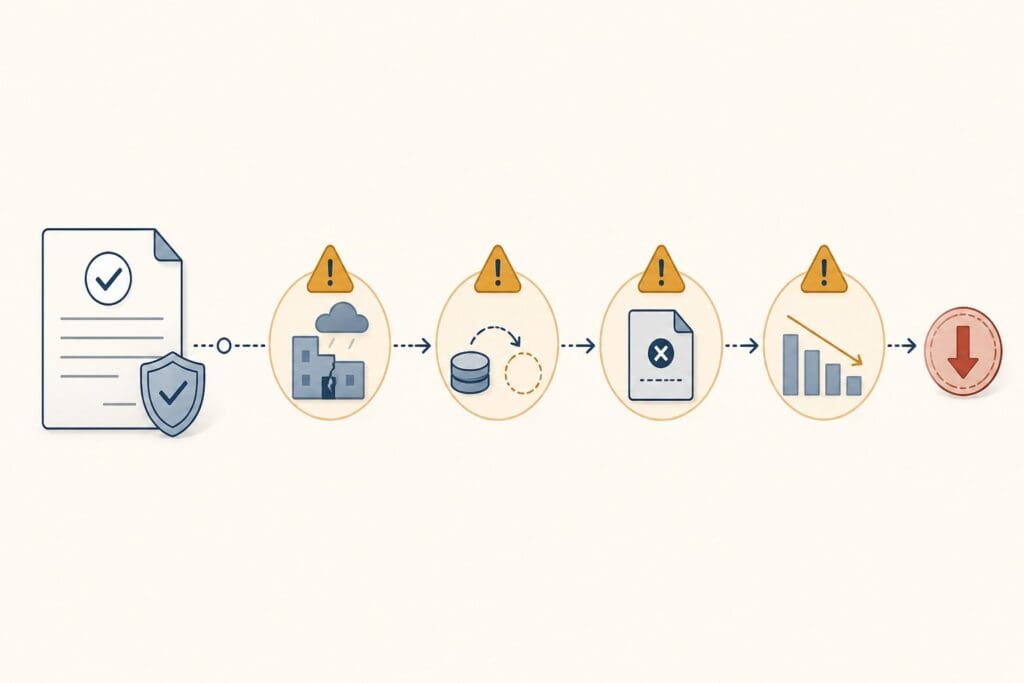
BDC dividend cuts rarely arrive without warning. Borrower amendments, rising PIK income, loan markdowns, non-accruals, and NAV erosion often reveal the pressure before the board resets the payout.
Read MoreThe Hidden Cost of Covered-Call ETFs

When investors begin thinking about monetizing their portfolio to generate retirement income, one of the most common strategies they encounter is covered‑call ETFs. These funds typically generate income by selling at‑the‑money (ATM) covered calls, a strategy that produces attractive distribution yields and makes them appear to be an ideal solution for retirees seeking dependable income.…
Read MoreWhy Some Companies Pay Base, Supplemental and Special Dividends

Many income‑producing companies, especially Business Development Companies (BDCs), Real Estate Investment Trusts (REITs), and certain energy and commodity producers use a three‑part dividend structure: base dividends, supplemental dividends, and special dividends. This approach allows them to provide stable income while still complying with federal distribution requirements and reflecting fluctuations in earnings. The Base Dividend: A Stable,…
Read MoreWhy Discounts to NAV Matter for Dividend Investors

We often hear from subscribers who grow concerned about the portfolio during periods of high volatility, especially when stock prices are declining. This article is meant to provide perspective on why discounts to NAV matter and how they can actually strengthen the case for dividend investing even in turbulent markets. When shares are priced below…
Read MoreWhy Net Investment Income Is the Gold Standard for Evaluating BDC Dividends

When evaluating Business Development Companies (BDCs) for dividend sustainability, savvy investors know that traditional earnings metrics can be misleading. Unlike regular corporations where net income provides a clear picture of profitability, BDCs require a more specialized approach to financial analysis. At Fly High Investing, we’ve seen firsthand how focusing on the wrong metrics can lead…
Read MoreThe Dividend Dilemma – Qualified vs Unqualified Dividends and Their Role in Different Accounts

While we touched upon Regulated Investment Companies and Qualified vs Unqualified dividends in a previous article, we thought it would be beneficial to dive deeper… When it comes to maximizing the income from your investments, understanding the nuances of dividends, especially how they’re taxed can make a huge difference. Dividends, whether qualified or unqualified, serve…
Read MoreEffects of Leverage on Dividend Stability in Income-Paying Companies

Leverage has a significant impact on the dividend stability of pass-through income investments, such as Business Development Companies (BDCs) and Real Estate Investment Trusts (REITs). Although BDCs are generally regulated as Regulated Investment Companies (RICs) for tax purposes while REITs operate under a separate section of the tax code, both are generally required to distribute…
Read MoreInterest Rate Sensitivity Affects High-Yield Dividend Securities

Interest rate sensitivity significantly impacts the performance of high-yield dividend securities, including Real Estate Investment Trusts (REITs) and Business Development Companies (BDCs). When interest rates rise, these companies often face increased borrowing costs, which can reduce their profitability and ability to maintain dividend payouts. As a result, investors might shift their focus to bonds and…
Read MoreThe Importance of Cash Flow Analysis in Dividend-Paying Investment Structures

Cash flow analysis is an important component in evaluating dividend-paying investment structures because it provides valuable insight into a company’s ability to sustain its dividend payments over time. While dividends are ultimately paid with cash, their long-term sustainability depends on a company’s ability to consistently generate sufficient earnings and cash from its operations. A company…
Read More